Artificial intelligence is changing the way people use technology in their daily lives. From answering simple questions to helping businesses manage customer requests, AI tools are becoming part of many industries. Two popular technologies in this field are AI agents and AI chatbots. Although they may seem similar, they work in different ways and serve different purposes.
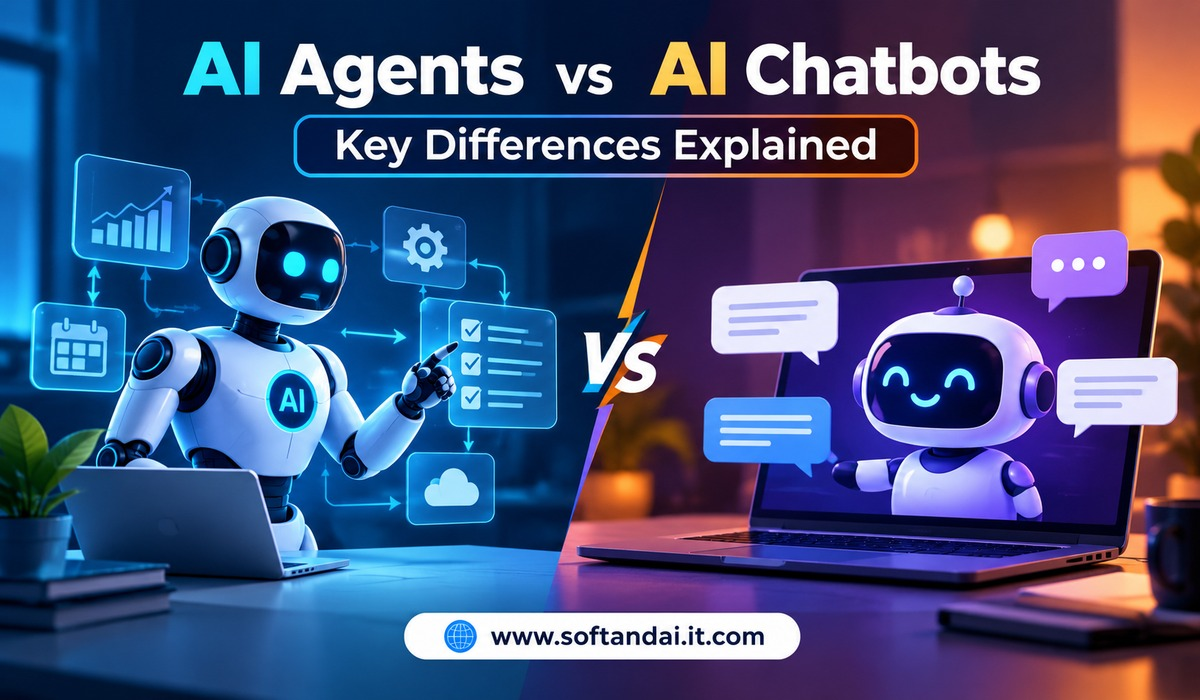
Many people use the terms AI agents and AI chatbots as if they mean the same thing. Both can communicate with users, understand questions, and provide useful responses. However, their abilities are not exactly the same. An AI chatbot mainly focuses on conversations, while an AI agent can take action, complete tasks, and work towards a specific goal with less human involvement.
Understanding the difference between these technologies is important for individuals, business owners, and companies planning to use artificial intelligence. Choosing the right tool can save time, improve customer service, and make everyday work easier.
In this article, we will explain AI agents vs AI chatbots, how they work, their main differences, their benefits, and how businesses can decide which technology is right for them.
What Is an AI Chatbot?
An AI chatbot is a computer program designed to communicate with people through text or voice. It can understand questions and provide answers based on the information available to it. People commonly use chatbots on websites, shopping platforms, banking applications, and customer support pages.
For example, when someone visits an online shopping website and asks about an order, a chatbot may explain how to check delivery details. If a customer wants to know about a company’s return policy, the chatbot can provide the required information without making the customer wait for a human support representative.
Modern AI chatbots are more advanced than older chat systems. Traditional chatbots usually follow fixed rules and provide answers based on selected options. Modern AI chatbots can understand everyday language, follow conversations, and respond in a more natural way.
Some chatbots can also remember information shared earlier in a conversation. This makes communication easier because users do not always need to repeat their questions.
However, most chatbots are mainly designed to provide information and support conversations. They may not be able to complete complicated tasks independently unless they are connected to other tools and services.
What Is an AI Agent?
An AI agent is a type of artificial intelligence system that can understand a goal, make decisions, and take actions to complete a task. Unlike a basic chatbot, an AI agent does not only focus on answering questions. It can also perform work using connected software, websites, and other digital tools.
For example, imagine that a business owner wants to prepare a report about monthly sales. A normal chatbot can explain how to create the report or suggest what information should be included. An AI agent, when given the necessary access, may collect sales information, organize the figures, prepare the report, and share the completed result.
AI agents can also handle tasks that involve several steps. They can examine information, decide what needs to happen next, and continue working until they reach the requested result or encounter something that requires human approval.
These systems are useful in areas where work involves repeated activities, decision-making, and communication with different software tools.
However, AI agents are not completely independent or always correct. They can make mistakes, misunderstand instructions, or take an unsuitable action. Their access and activities should be controlled, especially when they work with important business information.
AI Agents vs AI Chatbots: Understanding the Main Difference
The biggest difference between AI agents and AI chatbots is what they are designed to accomplish.
An AI chatbot is mainly built to communicate with users. It receives a question, understands what the person wants, and provides a suitable response. Its main purpose is to make information easier to access and improve communication.
An AI agent focuses more on completing tasks. It can understand instructions, plan the steps required, use connected tools, and take action. It may also check the result of an action before moving forward.
Consider a simple example of booking a meeting. If you ask a chatbot to help schedule a meeting, it may explain how to use your calendar or suggest a suitable time based on the information you provide.
An AI agent with calendar access may check your available time, compare it with other participants’ schedules, create the meeting, and send invitations if it has the required permission.
Both technologies can be helpful, but they provide different levels of assistance.
How AI Chatbots Work
AI chatbots work by receiving messages from users and understanding their meaning. When someone enters a question, the chatbot processes the words and tries to identify the user’s purpose.
It then creates a response using its training, available information, and any connected business data.
For example, a customer visiting a mobile phone company’s website may ask whether a particular phone is available. The chatbot can search the connected product information and provide an answer.
Some chatbots also use information from previous messages to understand the conversation better. If a customer first asks about a phone and then asks about its price, the chatbot may understand that the second question is related to the same product.
This makes the conversation feel more natural.
Many businesses use chatbots because they can answer common questions throughout the day. They can support customers outside normal office hours and reduce the amount of basic work handled by customer service employees.
However, when a request becomes too complicated, a chatbot may need to transfer the conversation to a human representative.
How AI Agents Work
AI agents follow a more action-based approach. They begin by understanding what the user wants to achieve. After that, they work out how to complete the task.
An AI agent may divide a large task into smaller steps. It can use connected tools to collect information, perform actions, and check whether the work has been completed successfully.
For example, a company may ask an AI agent to prepare a weekly summary of customer feedback. The agent could collect feedback from approved sources, group similar comments, identify common complaints, and prepare a summary for the management team.
The important point is that the agent is not simply explaining how to complete the work. It is actually performing parts of the task.
Some AI agents can also adjust their next steps based on the results they receive. If one method does not work, they may try another approved approach.
Their ability to take action depends on the software they can access, the instructions they receive, and the permissions provided by the user.
The Role of Human Involvement
Human involvement is another important difference between AI agents and AI chatbots.
Chatbots usually depend on users to guide the conversation. A person asks a question, receives an answer, and decides what to do next. The chatbot helps with communication, but the user generally remains responsible for completing the task.
AI agents can reduce the amount of manual work required. Once they receive a clear goal and the necessary permissions, they may complete several steps without asking the user for instructions after every action.
For example, a chatbot can explain how to organize customer information in a spreadsheet. An AI agent with access to the spreadsheet may organize the information itself.
Still, human involvement remains important. People should review important decisions, check sensitive information, and approve actions that could affect money, customer accounts, or business operations.
AI agents should support human work rather than replace human judgment completely.
Benefits of AI Chatbots for Businesses
AI chatbots offer several advantages to businesses, especially those that regularly communicate with customers.
One major benefit is faster customer support. Customers do not always need to wait for an employee to answer basic questions. A chatbot can provide information about products, services, prices, delivery details, and company policies.
Another advantage is that chatbots can handle many conversations at the same time. During busy periods, a business may receive hundreds of customer questions. Chatbots can respond to common requests and help reduce the workload for customer support teams.
They can also improve the customer experience by making information available at any time. A person shopping online late at night can still ask questions and receive immediate assistance.
Chatbots are also useful for collecting customer information. They can ask visitors about their needs, understand what products they are interested in, and direct them towards suitable services.
For small businesses, chatbots can be a practical starting point for using artificial intelligence without changing their entire working process.
Benefits of AI Agents for Businesses
AI agents provide a different set of benefits because they can perform tasks rather than simply communicate.
One important advantage is time savings. Many business activities involve repeated work, such as collecting information, updating records, preparing reports, and organizing data. AI agents can handle some of these activities when they have the correct tools and permissions.
They can also connect different parts of a business operation. For example, an AI agent may collect information from a customer management system, prepare a document, and send it through an approved communication platform.
Another benefit is the ability to handle multi-step tasks. Instead of requiring an employee to manage every stage, an AI agent can work through several connected activities.
Businesses can also use agents to monitor certain processes and identify problems that need attention. For example, an agent may review customer requests and highlight cases that have remained unanswered for too long.
These benefits can help employees spend more time on planning, creative work, customer relationships, and important decisions.
Can AI Agents and AI Chatbots Work Together?
Yes, AI agents and AI chatbots can work together, and combining them can provide a better experience.
A chatbot can act as the communication point between a customer and a business. It can understand the customer’s request and collect the necessary details. If the request requires action, it can pass the task to an AI agent.
For example, imagine a customer wants to change a delivery address after placing an order. The chatbot can ask for the order number and the new address. An AI agent connected to the company’s order system may then check whether the change is allowed and update the information after receiving the required approval.
The chatbot manages the conversation, while the agent handles the task.
This approach can make business operations smoother. Customers get a simple way to communicate, and employees spend less time handling routine requests.
However, businesses must ensure that both systems share information safely and follow company rules. They should also provide a way for customers to reach a human employee when necessary.
Real-World Uses of AI Agents and AI Chatbots
AI chatbots are commonly used in online shopping, banking, healthcare administration, education, and travel services.
In online shopping, they answer questions about products, delivery, payment methods, and returns. In banking, they can explain account services and help customers find information about transactions. In education, chatbots can answer questions about courses, admission processes, and study materials.
AI agents have wider task-based uses. In marketing, they may help collect campaign information, prepare reports, and organize customer details. In software development, they can assist with checking code, finding errors, and handling selected development tasks.
In business operations, agents can help organize documents, update records, and prepare summaries from different sources.
In travel services, an AI agent with suitable access may compare available travel options, prepare an itinerary, and help manage booking details. Actions involving payments or final reservations should still follow the user’s approval and the service provider’s rules.
These examples show that both technologies can support different types of work across many industries.
Challenges and Limitations of AI Agents and AI Chatbots
Although AI agents and AI chatbots offer many advantages, they also have limitations.
Chatbots may sometimes misunderstand questions or provide answers that are incomplete. If their information is outdated, they may share incorrect details. Some chatbots also struggle when users ask questions that are very different from their usual tasks.
AI agents face additional challenges because they can take actions. If an agent misunderstands an instruction, it may complete the wrong task or change information incorrectly.
Security is another important concern. Businesses must be careful about the information they share with AI systems. Giving an AI agent unnecessary access to customer records, financial details, or business accounts can create serious risks.
There is also the question of cost. More advanced AI agents may require additional software, setup, maintenance, and employee training. Small businesses should consider these expenses before choosing a solution.
Human review, clear instructions, limited permissions, and regular checks can reduce many of these problems.
How to Choose Between an AI Agent and an AI Chatbot
Choosing between these technologies depends on what you want to achieve.
If your main requirement is answering questions, supporting customers, and providing information, an AI chatbot may be enough. It is often easier to introduce and can improve communication without making major changes to existing business activities.
If you want to automate repeated tasks, connect different applications, and complete work that requires several steps, an AI agent may be more suitable.
For example, a small online store that receives regular questions about delivery and product availability may benefit from a chatbot. A larger store that wants to organize orders, review customer information, and prepare regular business reports may find AI agents more useful.
Some businesses may need both technologies. They can use chatbots for customer communication and AI agents for internal tasks.
Before making a decision, businesses should consider their budget, working needs, available software, security requirements, and the level of human control they want to maintain.
What Is the Future of AI Agents and AI Chatbots?
The future of AI agents and AI chatbots is likely to involve more advanced features and better communication between different software systems.
Chatbots are expected to become better at understanding everyday language, following longer conversations, and providing answers based on personal needs. This can make online support more useful and less frustrating for customers.
AI agents are also developing quickly. They are becoming better at working with connected tools, handling longer tasks, and adjusting their actions when situations change.
In the coming years, businesses may use AI agents to manage more everyday activities while employees focus on decisions that require experience, creativity, and personal understanding.
However, the growth of these technologies will also increase the need for proper security and responsible use. Companies will need clear rules about what AI systems can access, what actions they can perform, and when human approval is necessary.
The goal should not be to give artificial intelligence complete control over business activities. Instead, businesses should use it to make work easier, faster, and more organized.
Conclusion
AI agents and AI chatbots are both useful technologies, but they are designed for different purposes. AI chatbots mainly focus on communication, answering questions, and helping users find information. AI agents go further by understanding goals, making decisions, using connected tools, and completing tasks.
For businesses that want better customer communication, chatbots can be a simple and effective solution. For companies looking to reduce manual work and manage repeated activities, AI agents can provide greater support.
Neither technology is automatically better than the other. The right choice depends on the problem you want to solve and the results you expect.
As artificial intelligence continues to develop, AI agents and AI chatbots will become an important part of everyday digital activities. Businesses that understand their differences and use them responsibly can save time, improve services, and create better experiences for both employees and customers.
Frequently Asked Questions
1. What is the main difference between AI agents and AI chatbots?
The main difference is their purpose. AI chatbots are mainly designed to communicate with users and answer questions. AI agents can understand goals, make decisions, and perform tasks using connected tools.
2. Can an AI chatbot perform tasks like an AI agent?
Some advanced chatbots can perform basic tasks when connected to other software. However, AI agents are generally designed to handle more complex activities involving several steps and decisions.
3. Are AI agents better than AI chatbots?
Neither is always better. Chatbots are useful for customer communication and answering questions, while AI agents are more suitable for completing tasks and reducing manual work.
4. Can small businesses use AI agents?
Yes, small businesses can use AI agents for activities such as organizing information, preparing reports, and managing repeated tasks. The best option depends on their budget and business requirements.
5. Will AI agents replace AI chatbots in the future?
AI agents are unlikely to make chatbots completely unnecessary. Both technologies serve different purposes, and many businesses will benefit from using them together.