Artificial intelligence has become an important part of everyday life. People use AI tools to write articles, answer questions, create images, solve problems, translate languages, and complete many other tasks. These tools can save time and make difficult work easier. However, AI does not always provide correct information. Sometimes, it gives answers that sound confident but contain false facts, incorrect details, or completely made-up information. This problem is known as an AI hallucination.
AI hallucinations have become an important concern as more people depend on artificial intelligence for personal, educational, and professional work. A person may receive an incorrect answer without realising that the information is false. This can create confusion and lead to poor decisions, especially when AI is used for health, finance, education, business, or legal information.
Understanding why AI gives wrong answers is important for anyone who uses these tools. It is equally important to learn how to reduce these mistakes and get more reliable results. Although AI technology continues to improve, users must understand its limitations and check important information before trusting it.
What Are AI Hallucinations?
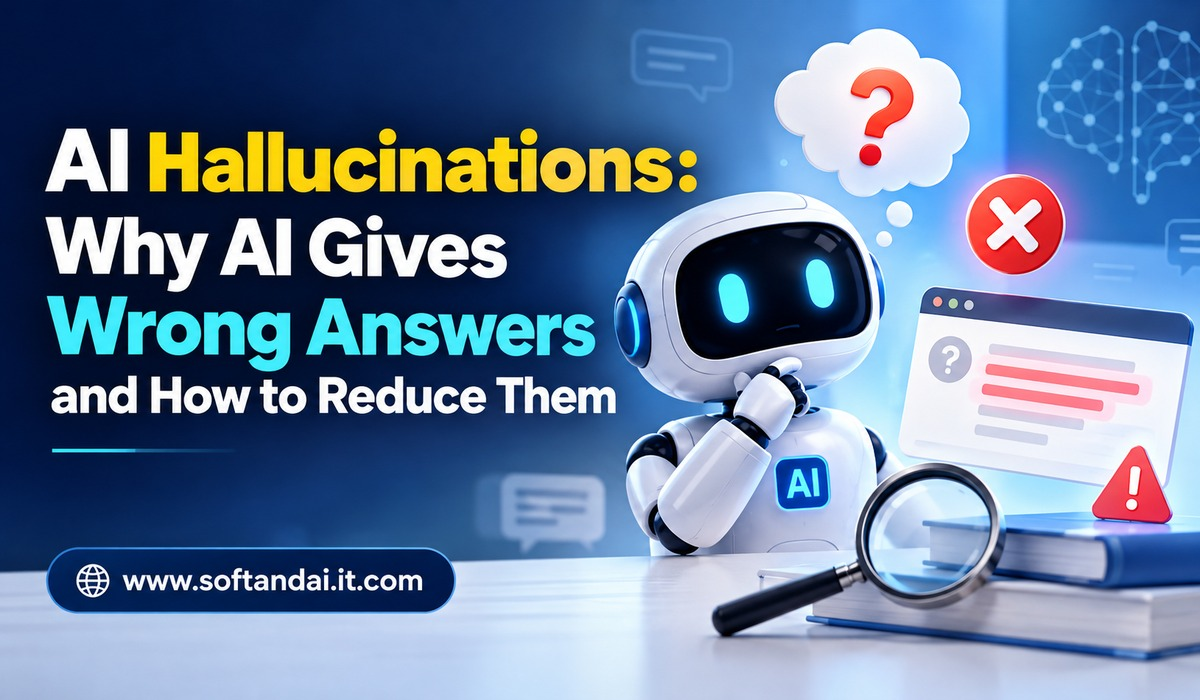
AI hallucinations happen when an artificial intelligence tool produces information that is incorrect, misleading, or completely invented. The answer may look professional and well-written, but the details may not match reality.
For example, someone may ask an AI tool about a famous book. Instead of providing accurate information, the tool might create a fake publication date, mention a chapter that does not exist, or give the wrong author’s name. The answer may sound natural enough that a reader believes it without checking.
Another example is when a user asks AI to provide research references for an article. The tool may generate the names of books, websites, research papers, or authors that do not exist. These details can look genuine, making the mistake difficult to notice.
AI hallucinations do not always happen because a tool has no information about a subject. Sometimes, the system has some correct knowledge but combines different details incorrectly. It may also misunderstand the question or fill gaps in its knowledge with information that appears likely.
This is why AI-generated answers should not automatically be treated as facts. Even advanced tools can make mistakes.
Why Does AI Give Wrong Answers?
AI tools do not think and understand information in exactly the same way as humans. They learn patterns from large amounts of text and other information. When a user asks a question, the system uses what it has learned to create a suitable response.
It does not automatically know whether every sentence it produces is true. Its ability to create natural answers is not the same as its ability to verify facts.
One major reason for hallucinations is incomplete or unclear information. If the AI tool does not have enough reliable information about a subject, it may still try to provide an answer. Instead of clearly explaining that it does not know something, it may produce a response based on patterns that seem reasonable.
Another reason is the quality of the information used to train AI systems. These systems learn from large collections of online content, books, articles, and other material. However, not everything available online is accurate. Some sources contain outdated facts, personal opinions, mistakes, or misleading information. If an AI system learns from unreliable content, its answers may also contain errors.
AI can also misunderstand the user’s question. A short or confusing question may have several possible meanings. The system might choose the wrong meaning and provide an answer that does not match what the user actually wanted.
For example, asking about the latest developments in a particular company may produce an outdated response if the AI tool does not have access to current information. The answer may have been correct in the past but no longer reflect the present situation.
The Role of Outdated Information in AI Mistakes
Information changes every day. Governments introduce new rules, companies release products, businesses change their services, and technology develops quickly.
An AI tool trained on older information may not know about these changes. If someone asks about current prices, recent news, new government policies, or the latest software updates, the system may provide information that is no longer correct.
For example, a user might ask about the current price of a smartphone. If the AI tool does not have access to live product information, it may provide an old price based on information it learned earlier.
The same issue can happen with sports results, business announcements, entertainment releases, and financial information.
Some AI tools can search the internet or connect to updated information sources. These features can help reduce outdated answers, but they do not guarantee complete accuracy. Search results can also contain incorrect or incomplete details.
Users should pay special attention to questions involving current events or information that changes frequently.
Why AI Sometimes Sounds Confident Even When It Is Wrong
One of the biggest problems with AI hallucinations is that incorrect answers can sound very convincing. AI tools are designed to produce clear and natural language. They can explain information in a professional tone, even when the information itself is inaccurate.
Human readers often connect confidence with knowledge. When an answer is written clearly and includes detailed explanations, people may assume that it is correct.
However, the writing style of an AI response does not prove that the information is reliable.
For example, an AI tool may provide a detailed explanation of a historical event but include the wrong date or mention a person who was not involved. The explanation may look believable because the sentences are well organised.
This creates a risk for students, writers, researchers, business owners, and professionals who use AI-generated information without checking it.
AI users should remember that a confident answer is not always a correct answer. It is better to verify important facts than to depend only on how convincing the response sounds.
How AI Hallucinations Affect Students and Education
Students increasingly use AI tools to understand difficult subjects, prepare assignments, improve writing, and find answers to academic questions. These tools can make learning easier, but incorrect information can create problems.
A student who depends completely on AI may learn facts that are not correct. For example, an AI-generated explanation of a scientific concept might contain an incorrect detail. If the student uses that explanation in an assignment or examination, the mistake may affect their understanding and performance.
AI can also provide fake research references or incorrect explanations of historical events. Students who copy these answers without checking the original sources may submit inaccurate work.
Teachers and educational institutions need to help students understand how to use AI responsibly. AI should support learning rather than replace independent thinking.
Students should compare important answers with textbooks, trusted educational websites, academic publications, and information provided by their teachers. This approach helps them benefit from AI while reducing the chances of learning incorrect information.
The Impact of AI Hallucinations on Businesses
Businesses use artificial intelligence for customer support, content creation, market research, communication, and daily office work. AI can reduce repetitive tasks and help employees complete work more quickly.
However, incorrect information can create serious problems when businesses depend too much on automated answers.
For example, an AI customer support tool might provide incorrect details about a company’s refund policy. A customer who follows that information may become frustrated when the actual policy is different.
Similarly, an AI tool used for market research might produce incorrect company figures or mention business trends that are not supported by reliable evidence.
These mistakes can affect customer trust and business decisions.
Companies should review AI-generated content before publishing it or sharing it with customers. Important business information should be checked against official documents and reliable sources.
Human supervision remains important, even when businesses use advanced AI tools.
How to Reduce AI Hallucinations
AI hallucinations cannot be completely avoided in every situation, but users can take practical steps to reduce them.
One of the easiest ways is to write clear and specific questions. Instead of asking a broad question, explain exactly what information you need. When the question is clear, the AI tool has a better chance of understanding your purpose.
For example, instead of asking, “Tell me about artificial intelligence,” you can ask, “Explain how artificial intelligence helps small businesses manage customer support in simple language.” A focused question can produce a more useful response.
Another helpful approach is to ask AI to explain when it is uncertain. Users can request that the tool avoid guessing and clearly mention when information cannot be confirmed. This does not guarantee that every answer will be accurate, but it can encourage more careful responses.
It is also important to ask for reliable sources when dealing with factual information. If the AI tool provides references, check whether those sources actually exist and support the claims being made. Do not assume that a reference is genuine simply because it appears in the answer.
Using AI tools with internet search features can also help with questions about current information. However, users should still check the original sources rather than depending only on AI summaries.
Another useful method is to divide complicated questions into smaller parts. When a question covers several subjects at once, the answer may become confusing or contain mistakes. Asking separate questions makes it easier to review each response.
Most importantly, users should develop the habit of checking important facts before using AI-generated information.
The Importance of Human Checking
Artificial intelligence can complete many tasks quickly, but human checking is still necessary. People have the ability to compare information with real-world situations, understand context, and recognise when something does not make sense.
For example, a content writer may use AI to prepare an article about a new technology product. The tool can help with the introduction, explanations, and overall structure. However, the writer should independently check product specifications, prices, release information, and company announcements.
The same approach applies to businesses, students, teachers, and researchers.
Human checking is especially important when an AI answer could influence someone’s health, financial decisions, legal situation, or personal safety. In these areas, incorrect information can have serious consequences.
AI should be treated as a helpful assistant rather than a final authority. People should use their own judgement before accepting or sharing its answers.
Can Better AI Technology Stop Hallucinations?
Technology companies are continuously working to make AI systems more reliable. Newer AI models are being developed with improved reasoning abilities, better information handling, and stronger methods for checking answers.
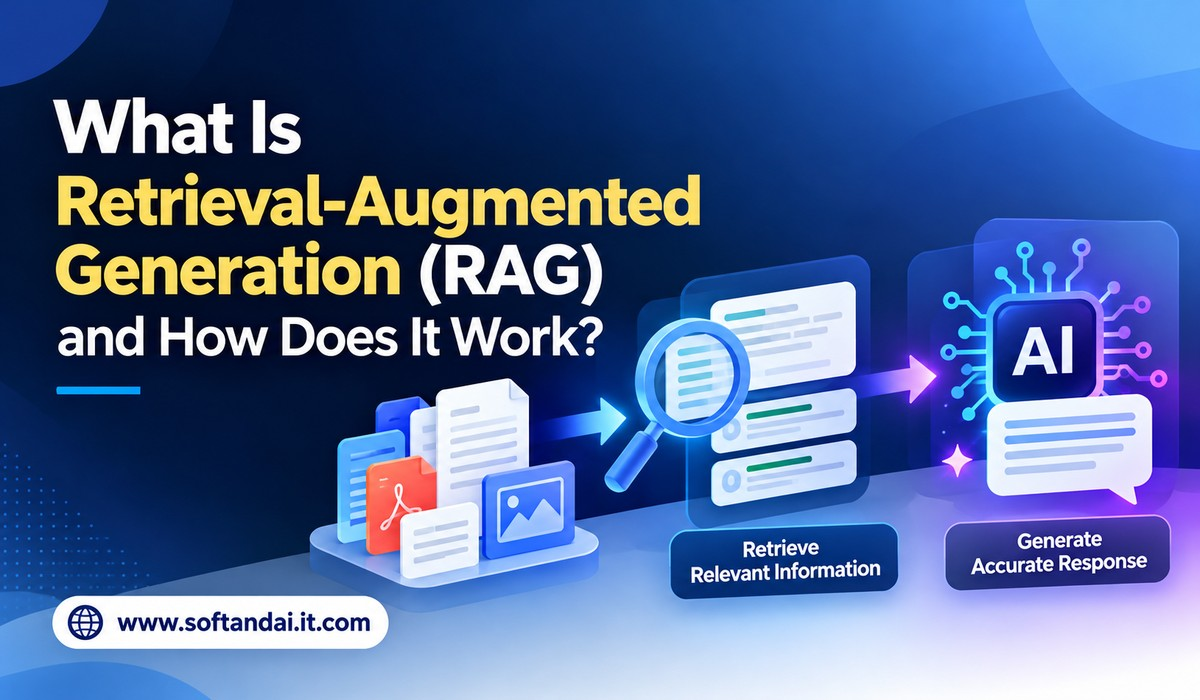
Some systems can connect to trusted information sources and use those sources while preparing responses. This can help them provide more accurate answers, especially when users ask about specific facts.
Other improvements focus on helping AI recognise uncertainty. Instead of generating an answer for every question, a better system should be able to explain when it does not have enough information.
Developers are also working to improve the quality of training information and reduce errors during the response process.
However, completely removing hallucinations remains difficult. Human language is complex, information changes constantly, and many questions do not have simple answers.
Even a highly advanced AI system can misunderstand a question or produce incorrect details. This means that improvements in technology must be supported by responsible use.
Why Users Should Not Depend Completely on AI
AI tools are useful because they can make everyday work faster and easier. However, depending on them for every decision can create unnecessary risks.
When people accept every AI answer without thinking, they may stop checking facts independently. Over time, this can affect their ability to identify mistakes and make informed decisions.
For example, a website owner may use AI to prepare several articles. If the owner publishes everything without reviewing the information, the website may contain incorrect facts, misleading advice, or fake references. This can reduce reader trust and affect the website’s reputation.
Similarly, an employee who uses AI-generated reports without checking the figures may make poor business decisions.
The best approach is to combine AI’s speed with human understanding. Let AI help with research, writing, explanations, and ideas, but keep responsibility for important decisions with people.
The Future of AI Accuracy
Artificial intelligence will continue to become part of daily life. As more people use AI for education, business, entertainment, and personal tasks, the need for accurate information will become even more important.
Future AI systems are expected to become better at understanding questions, identifying missing information, and using trusted sources. These improvements may reduce the number of incorrect answers and make AI tools more useful.
Businesses and technology developers will also need to focus on transparency. Users should have a better understanding of where information comes from and whether an answer has been checked against reliable sources.
At the same time, digital education will play an important role. People need to learn that AI-generated information is not automatically true. Understanding its strengths and weaknesses will help users make better decisions.
The future of AI will not depend only on how quickly these systems can produce answers. It will also depend on how accurately they can provide information and how responsibly people use it.
Conclusion
AI hallucinations are one of the important challenges facing modern artificial intelligence. They happen when AI tools generate incorrect, misleading, or completely invented information. These mistakes can occur because of unclear questions, outdated information, unreliable learning material, and limitations in how AI creates responses.
Although technology companies are working to improve AI accuracy, users should not assume that every answer is correct. Writing clear questions, checking reliable sources, using updated information, and reviewing important facts can help reduce the risk of AI hallucinations.
Artificial intelligence is a powerful tool that can save time and support different types of work. However, it works best when combined with human knowledge and careful thinking. By understanding why AI gives wrong answers and learning how to identify mistakes, people can use AI more safely and confidently.
Frequently Asked Questions
1. What are AI hallucinations?
AI hallucinations happen when an artificial intelligence tool produces false, misleading, or invented information. These answers may sound convincing but contain incorrect facts, dates, names, or explanations.
2. Why do AI tools create false information?
AI tools can create false information because of unclear questions, incomplete knowledge, outdated data, or mistakes in understanding information. They sometimes generate answers that appear likely instead of providing verified facts.
3. Can AI hallucinations be completely stopped?
No. AI hallucinations can be reduced through better technology, improved information sources, and careful checking. However, completely preventing every possible mistake remains a challenge.
4. How can users identify AI hallucinations?
Users can compare AI answers with trusted websites, official documents, books, and reliable research sources. They should also check names, dates, statistics, and references before using important information.
5. Is it safe to trust AI-generated answers?
AI-generated answers can be useful, but they should not be trusted blindly. Users should verify important information, especially when it relates to health, finance, legal matters, education, or business decisions.